What Is a Mental Health Support System and Why It Matters

TL;DR:
A comprehensive mental health support system includes personal, professional, and community resources working together to protect emotional well-being and foster resilience. Building and matching support types proactively enhances recovery outcomes and reduces crisis risks. Telehealth and peer groups expand access, emphasizing the importance of early intervention and clear communication in sustaining mental health.
Most people picture a single therapist or a trusted friend when they think about mental health support. The reality is much broader. A mental health support system is the entire network of people, services, and resources working together to protect your emotional well-being, build resilience, and help you recover when life gets hard. 1 in 5 people globally experience a common mental health condition, which means almost every family is touched by this need. Understanding what a mental health support system actually involves is the first step toward building one that genuinely works.
Table of Contents
Key takeaways
Point | Details |
Support systems are layered | They include personal, professional, and community networks, not just therapy or friends. |
Four support types matter | Emotional, esteem, informational, and tangible support each serve a distinct purpose. |
Proactive beats reactive | Building your network before a crisis makes it far more effective when you need it most. |
Telehealth expands access | New York residents can access quality psychiatric care quickly, including via telehealth. |
Matching support to need | Asking for the right type of support in a given moment determines whether it actually helps. |
What is a mental health support system, really
A mental health support system is not a single service or relationship. It is a collection of interconnected resources that address your psychological, emotional, and practical needs across different situations and life stages.
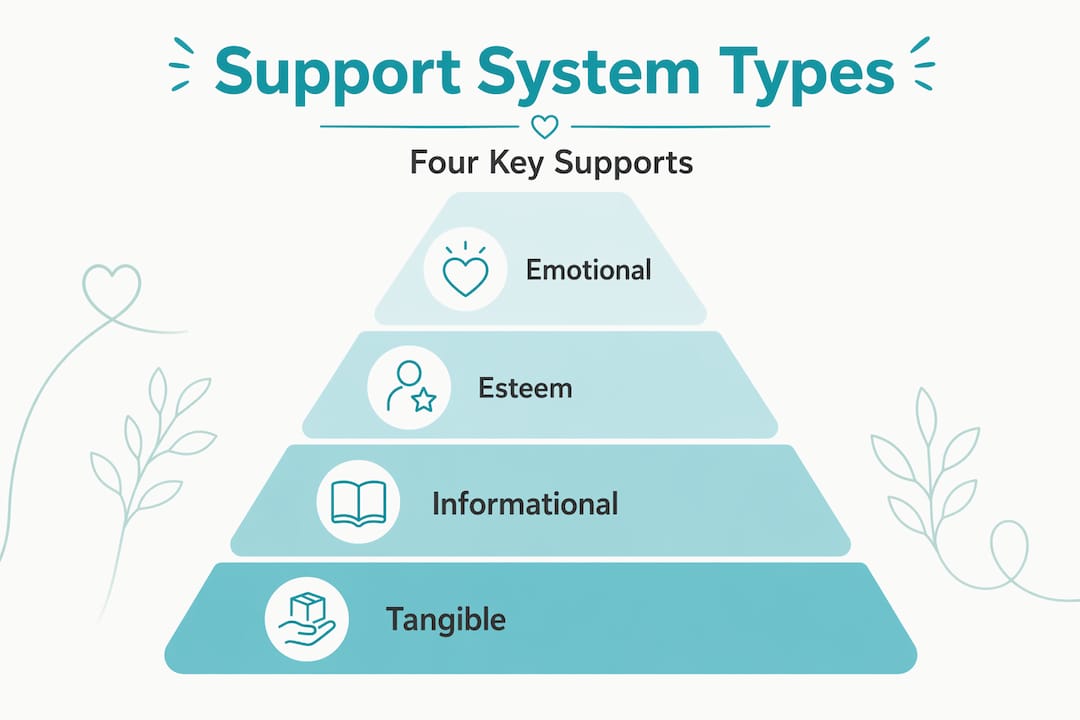
Researchers identify four core types of social support that together create a well-rounded network:
Emotional support: Listening without judgment, offering empathy, and validating feelings. This is what a trusted friend, family member, or therapist provides during moments of grief, anxiety, or depression.
Esteem support: Affirming your worth and competence, especially when self-doubt takes over. A mentor, coach, or supportive peer group can play this role.
Informational support: Sharing knowledge, guidance, and resources. A psychiatrist explaining medication options, or a counselor walking you through a diagnosis, falls into this category.
Tangible (instrumental) support: Practical help like childcare, transportation to appointments, or financial assistance that removes barriers to care.
Professional services form another critical layer. This includes psychiatrists, therapists, psychologists, and counselors who provide structured clinical care. It also includes Employee Assistance Programs, which 62% of U.S. employers now offer, covering counseling and crisis intervention. Community mental health services, peer support specialists, and school-based mental health programs round out the picture.
For children and adolescents, support systems look a little different. School counselors, pediatric psychiatrists, family therapists, and peer networks all play interconnected roles. A teenager managing anxiety or school refusal needs support that spans the classroom, home, and clinical settings together.
Pro Tip: When building a support system for a loved one with ADHD, autism spectrum disorder, or OCD, include professionals who specialize in those conditions specifically. Generalized support is a starting point, not a destination.
Why a strong support system changes health outcomes
The evidence connecting social support to better mental health is substantial. Strong social networks buffer the effects of stress, reduce the risk of depression, ease anxiety, and are even linked to lower all-cause mortality. These are not small effects.
“Social support helps people cope better with stress, recover more quickly from illness, and maintain better mental health overall. Without it, individuals are significantly more vulnerable to crisis.” — World Health Organization
People who engage actively with community-based mental health care that integrates peer support and psychosocial rehabilitation show measurably better recovery outcomes. Peer support groups, in particular, do something clinical appointments alone cannot: they create belonging. And belonging matters deeply to mental health.
Research on online support communities confirms this effect. Social identification within mental health groups increases members’ confidence in managing their own mental health. This is known as self-efficacy, and it is one of the strongest predictors of long-term recovery and resilience. When you feel understood by people who share your experience, your belief in your own ability to cope grows.

For individuals managing chronic conditions, postpartum or perinatal mental health challenges, or pediatric and adolescent psychiatric needs, this sustained support structure becomes even more critical. The period after a new diagnosis or a major life transition is exactly when a layered support network prevents a difficult moment from becoming a full-scale crisis.
Early intervention matters, too. Children and adolescents with anxiety, depression, or ADHD who receive structured support earlier in life consistently show better long-term outcomes than those who wait years before getting help.
How to find and build your support network
Building a mental health support system takes some honest self-reflection first. You need to assess what you currently have, what is missing, and what type of support your situation actually calls for.
Here is a practical approach:
Audit your current network. List the people and services you already rely on. Identify gaps by thinking through which types of support are absent: who would you call at 2 a.m.? Who explains your treatment clearly? Who helps practically when things fall apart?
Identify your primary needs right now. Someone navigating a fresh depression diagnosis needs different support than a parent managing a child’s school refusal. Be specific about what would actually help.
Connect with professional mental health resources. A psychiatrist or therapist provides the clinical foundation that personal relationships cannot replace. In New York, both in-person care in White Plains or Brooklyn and telehealth psychiatry options make professional support more accessible than ever.
Explore peer and community support. Support groups for mental health conditions like depression, OCD, or ADHD exist both locally in Westchester County and online. The National Alliance on Mental Illness (NAMI) and similar organizations maintain directories of local chapters.
Communicate your needs clearly. Most people in your network want to help but do not know how. Telling someone specifically “I need you to just listen right now, not give advice” is not demanding. It is giving them a way to actually show up for you.
Set and maintain healthy boundaries. Support systems only function sustainably when both sides respect limits. Leaning on one person for everything strains that relationship and leaves you more vulnerable when they are unavailable.
Pro Tip: If you are in New York and unsure where to start professionally, telehealth psychiatry means you can often get an appointment within 24 hours, from your own home, without navigating complicated logistics.
Common challenges and misconceptions about support systems
Even when people understand the value of a mental health support system, several obstacles tend to get in the way of building or using one effectively.
Stigma remains the most common barrier. Many people, especially men and older adults, feel that asking for help signals weakness. Support systems actively combat this. When someone you respect openly uses therapy or attends a support group, it normalizes help-seeking in your own mind.
Mismatched support is an underappreciated problem. Asking for the wrong type of support in a given moment can make things worse. If you need someone to validate your feelings and you instead receive unsolicited advice, you may feel more isolated than before the conversation. Learning to name what you actually need changes the quality of every support interaction.
There are also key differences between support during an active crisis versus proactive resilience-building. Crisis support is reactive: it responds to immediate pain. Proactive support, built before things fall apart, is what actually shapes long-term mental health trajectories. Waiting until crisis to build your network is like building a roof after the storm has already arrived.
Other common challenges include:
Geographic or financial barriers to professional care, which telehealth services address directly
Fear of burdening loved ones, which leads to isolation
Difficulty trusting new providers, especially for those with past negative clinical experiences
Privacy concerns within peer groups, which reputable organizations address through clear confidentiality standards
Addressing these barriers openly, rather than waiting for them to resolve themselves, is part of building a support system that actually holds.
My perspective on integrating support for lasting mental health
I have seen, time and again, that the people who fare best over the long run are not the ones with the most therapists or the most check-ins. They are the ones who built a mixed system: a psychiatrist they trust for clinical decisions, a peer group that provides belonging, and one or two people in their personal life who understand their needs clearly.
In my experience, the most underestimated piece is telehealth psychiatry, particularly for families in New York who are time-pressed or live far from specialized care. White Plains mental health treatment used to require significant effort to access. Now, the same quality of psychiatric care can reach someone in a rural part of the state on a Tuesday afternoon from their kitchen table. That matters. It is not a lesser form of care. For many patients, it is the form of care they will actually use.
The other thing I would tell anyone reading this: stop waiting for things to get bad enough to justify getting help. That threshold is a moving target, and it always seems to move further away. Build your support network now, while you have the capacity to think clearly about what you need. The proactive work done before a crisis is what determines how you come through it.
— Martin
How 2ndarc can be part of your support system
When professional psychiatric care is part of your support network, everything else functions better. At 2ndarc, the team specializes in personalized psychiatric care for children, adolescents, and adults across New York, with locations in White Plains and Brooklyn and telehealth services available statewide. Conditions treated include anxiety, depression, ADHD, OCD, autism spectrum disorder, school refusal, and postpartum and perinatal mental health challenges. Every patient receives a custom treatment plan built around their specific needs, not a one-size-fits-all approach. Medication management is handled with care and ongoing collaboration. Most major insurance plans are accepted. New patients can often be seen within 24 hours. If you are ready to add professional psychiatric support to your network, book your appointment online today.
FAQ
What is a mental health support system?
A mental health support system is a network of people, professionals, and community resources that work together to support your emotional well-being and help you manage mental health challenges. It includes personal relationships, clinical care, peer groups, and community services.
What are the main types of support in a mental health network?
The four core types of social support are emotional, esteem, informational, and tangible support. Each type serves a different function, and a strong support system includes all four.
How do I find mental health support in New York?
You can access in-person psychiatric care in White Plains or Brooklyn, or use telehealth psychiatry services available across New York State. Organizations like NAMI also maintain directories of local support groups for mental health conditions.
Why does matching support type to need matter?
Receiving the wrong type of support, such as advice when you need empathy, can increase feelings of isolation rather than reducing them. Clearly communicating what kind of support you need in a given moment significantly improves the quality of every interaction.
Can online support groups really help with mental health?
Yes. Research shows that social identification in online groups increases self-efficacy, meaning your belief in your ability to manage your own mental health. This makes peer and community support a meaningful complement to professional care.
Recommended


Comments